Mezzanines are invaluable additions to industrial and commercial spaces, providing extra square footage without expanding the building’s footprint. Whether you’re planning a mezzanine for storage, office space, or production areas, meticulous attention to detail during the design phase is paramount. One of the crucial aspects of mezzanine design is determining the right dimensions to ensure functionality, safety, and compliance with building regulations. In this blog post, we’ll delve into the critical dimensions you need to consider when designing a mezzanine.
Height Clearance
Before embarking on mezzanine design, assess the available vertical space. Ensure adequate clearance between the finished floor of the mezzanine and the ceiling overhead. This clearance should accommodate not only the height of the mezzanine itself but also any equipment, machinery, or fixtures that will be installed on it.
Floor Area
The floor area of the mezzanine should be sufficient to accommodate the intended use. Consider factors such as the type of activities that will take place on the mezzanine, the number of occupants, and any furniture or equipment that will be placed on the floor. Ensure that the floor area provides ample space for movement and functionality without feeling cramped or overcrowded.
Staircase Dimensions
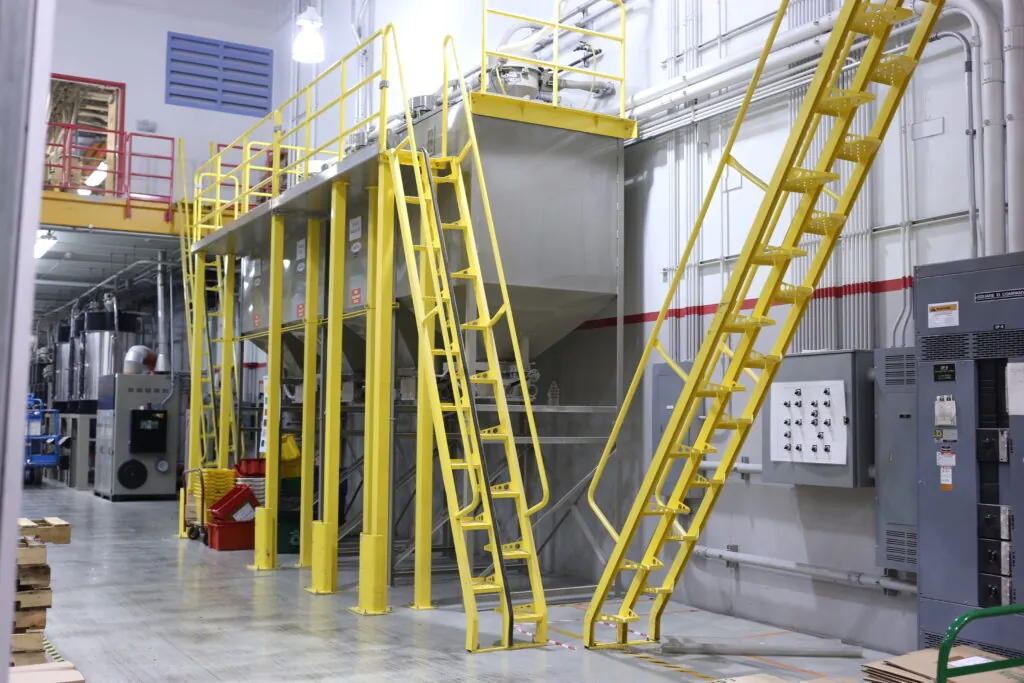
Mezzanine access is typically provided via stairs, so it’s essential to consider staircase dimensions carefully. Factors to consider include the width of the stairs, the riser height (the vertical distance between each step), and the tread depth (the horizontal depth of each step). Adhering to building codes and regulations regarding staircase dimensions is crucial for safety and compliance.
Headroom Clearance
Maintaining adequate headroom clearance throughout the mezzanine is essential for user comfort and safety. Ensure that there is sufficient vertical space above walkways, stairs, and other areas of the mezzanine to prevent occupants from bumping their heads on overhead structures. Adhering to building codes regarding minimum headroom clearance is essential to ensure compliance.
Load-Bearing Capacity
Mezzanines are designed to support specific loads, including the weight of occupants, furniture, equipment, and stored materials. Ensure that the structural components of the mezzanine, including beams, columns, and flooring, are engineered to withstand the anticipated loads. Consult with a structural engineer to determine the appropriate load-bearing capacity based on the intended use of the mezzanine.
Handrail Height
Handrails are essential safety features on stairs leading to mezzanines, supporting and preventing falls. Ensure that handrails are installed at the appropriate height according to building codes and regulations. The height of handrails typically ranges from 34 inches to 38 inches above the surface of the mezzanine floor.
Guardrail Height
Guardrails are necessary for preventing falls from the open sides of mezzanines. Ensure that guardrails are installed at the appropriate height to provide adequate protection. Building codes typically require guardrails to be at least 42 inches high. Also consider any requirements for spacing between railings and the strength of the railings.
Column Spacing
The spacing of columns supporting the mezzanine is a critical consideration that can impact the layout and functionality of the space below. Ensure that column spacing is optimized to minimize obstruction and interference with activities on the lower level, while providing adequate structural support for the mezzanine.
Clearance Beneath Mezzanine
Consider the clearance beneath the mezzanine, especially if the space below will be used for activities or storage. Ensure that there is sufficient clearance for tall equipment or machinery, as well as forklifts or other vehicles that may access the area beneath the mezzanine.
Conclusion
Designing a mezzanine requires careful consideration of various dimensions to ensure functionality, safety, and compliance with building regulations. By assessing the dimension factors, you can create a space that meets your needs while maximizing efficiency and safety. Consulting with professionals experienced in mezzanine design can help ensure that your mezzanine project is successful and meets all necessary requirements.