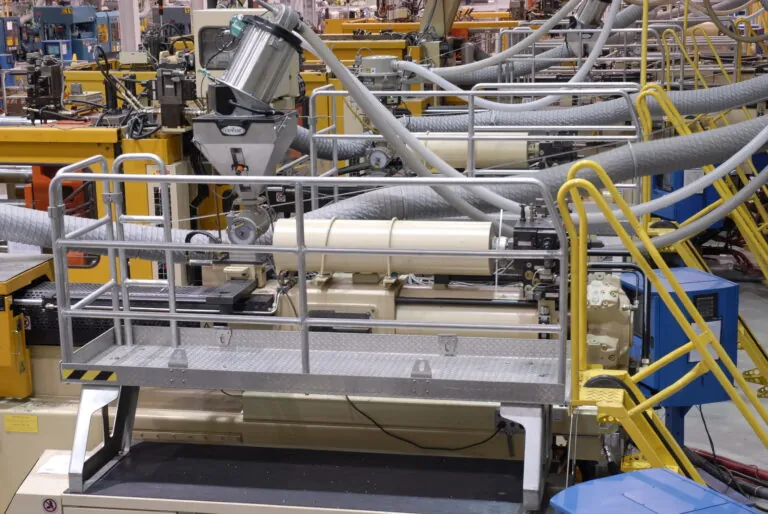

Loading dock stairs are essential components of industrial and commercial facilities, providing safe access to elevated platforms for workers engaged in loading and unloading operations. Various options are available when selecting the best material for loading dock stairs. Each comes with its own set of advantages and disadvantages. In this comprehensive guide, we’ll explore the pros and cons of materials commonly used for loading dock stairs, helping you make an informed decision for your facility.
1. Powder Coated or Galvanized Steel

Pros:
Durability: Steel is renowned for its strength and durability, making it an excellent choice for heavy-duty applications like loading dock stairs. Steel stairs can withstand heavy foot traffic, equipment loads, and exposure to harsh environmental conditions without compromising structural integrity.
Versatility: Steel offer versatility in stair design and customization, allowing for tailored solutions to suit specific loading dock configurations and requirements. Steel can be fabricated in various shapes, sizes, and configurations to accommodate different space constraints and functional needs.
Fire Resistance: Steel is inherently fire-resistant, providing an added layer of safety in industrial environments where fire hazards may be a concern. Steel loading dock stairs can help prevent the spread of fires and facilitate safe evacuation in emergency situations.
Low Maintenance: Steel stairs require minimal maintenance compared to other materials. They are resistant to corrosion, rot, and pest infestation, reducing the need for frequent repairs or replacement and lowering long-term maintenance costs.

Cons:
Cost: Steel stairs tend to have a higher upfront cost compared to some alternative materials. The initial investment may be higher, particularly for custom-designed or prefabricated steel stair systems.
Weight: Steel stairs are heavier than those made of other materials, which can pose challenges during installation and transportation. Special equipment and expertise is often required to handle and install steel loading doc stair components safely.
Corrosion: While steel is generally resistant to corrosion, it is not entirely immune. Exposure to moisture, chemicals, and harsh environmental conditions can lead to corrosion over time, requiring periodic inspection and maintenance to prevent deterioration.
2. Aluminum

Pros:
Lightweight: Aluminum is significantly lighter than steel, making it easier to handle, transport, and install. Aluminum stairs offer a lightweight yet sturdy solution for loading dock access without sacrificing structural integrity.
Corrosion Resistance: Aluminum is naturally resistant to corrosion, making it an ideal choice for outdoor or marine environments where exposure to moisture and saltwater is a concern. Aluminum stairs offer long-term durability and minimal maintenance requirements in corrosive environments.
Aesthetic Appeal: Aluminum stairs boast a sleek and modern appearance, enhancing the visual appeal of loading dock areas. Aluminum can be finished with various coatings or treatments to achieve desired aesthetics and complement architectural styles.
Cons:
Strength: While aluminum is lightweight, it is not as strong as steel. Aluminum stairs may have lower load-bearing capacities and may not be suitable for heavy-duty applications or high-traffic areas.
Cost: Aluminum stairs may have a higher upfront cost compared to some other materials, particularly premium-grade alloys. The initial investment may be higher, depending on the desired specifications and finishes.
Limited Customization: Aluminum stairs may offer limited customization options compared to steel. While they can be fabricated in various designs and configurations, customization options may be more limited due to material constraints.
Conclusion
Choosing the best material for loading dock stairs requires careful consideration of factors such as durability, cost, maintenance requirements, and environmental conditions. Carbon steel and aluminum each offer unique advantages and disadvantages, allowing facility managers to select the option that best suits their specific needs. Whether prioritizing strength, corrosion resistance, or aesthetic appeal, understanding the pros and cons of different materials is essential for making informed decisions to ensure safe and efficient access to loading dock areas.