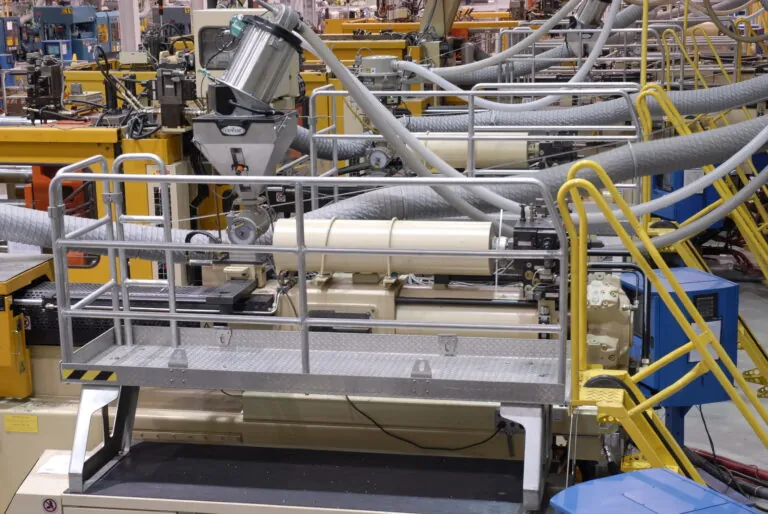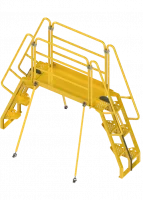

Conveyor crossover systems are common in industrial settings. They facilitate the efficient movement of materials and products throughout warehouses, manufacturing plants, and distribution centers. Conveyor crossover stairs provide safe access over conveyor belts and other equipment, allowing workers to navigate the workspace without obstruction.
When designing conveyor crossover stairs, careful consideration must be given to both horizontal span and vertical clearance to ensure safety, functionality, and compliance with regulatory requirements. In this post, we’ll explore the key considerations for calculating horizontal span and vertical clearance for conveyor crossover stairs.
Horizontal Span
The horizontal span of a conveyor crossover refers to the distance between support points or landing areas on either side of the conveyor system. Calculating the horizontal span is crucial for determining the length of the crossover. Several considerations should be taken into account when calculating the horizontal span:

Conveyor Width
Measure the width of the conveyor system, including any guards or enclosures, to determine the minimum span required for the crossover stairs. Ensure that the stairs extend beyond the width of the conveyor to provide safe passage for workers.
Support Structure
Evaluate the structural support available for the crossover stairs, such as existing platforms, mezzanines, or building columns. Design the stairs to span the distance between these support points while maintaining stability and structural integrity.
Load Capacity
Consider the anticipated load capacity of the crossover stairs, including the weight of workers, materials, and equipment. Ensure that the stairs are designed to support the intended loads without excessive deflection or stress on structural components.
Safety Features
Factors in consideration for worker safety include the presence of handrails or guardrails. Design the crossover to accommodate workers of varying sizes, ensuring safe and comfortable passage over machinery and other obstacles.
Vertical Clearance
Vertical clearance refers to the distance between the walking surface of the crossover stairs and the floor or surface below. Calculating vertical clearance is essential for ensuring that workers can safely navigate beneath the crossover stairs without encountering obstacles or hazards. Here are some key considerations for determining vertical clearance:

Conveyor Height
Measure the height of the conveyor system, including any moving parts or protruding components, to determine the minimum vertical clearance required for the crossover stairs. Ensure that there is sufficient space for workers to pass safely beneath the stairs without risk of injury.
Safety Regulations
Consult relevant safety regulations, such as the Occupational Safety and Health Administration (OSHA) guidelines, to determine minimum clearance requirements for conveyor crossover stairs. Adhere to these regulations to ensure compliance and minimize the risk of accidents or injuries in the workplace.
Maintenance Access
Consider the need for maintenance and servicing of the conveyor equipment when calculating vertical clearance. Ensure that there is adequate space for workers to access equipment and perform maintenance tasks safely without interference from the crossover stairs.
Fall Protection
Evaluate the need for fall protection measures, such as handrails or guardrails, to prevent workers from falling off the crossover stairs. Install appropriate fall protection systems to mitigate the risk of falls and ensure the safety of workers at elevated heights.
Conclusion:
Calculating horizontal span and vertical clearance for conveyor crossover stairs is essential for creating safe and functional access points in industrial environments. By considering factors from conveyor width to crossover height, designers and engineers can ensure that crossover stairs are functional, safe and compliant. Collaborating with experienced professionals and consulting relevant safety standards can help ensure the successful design and installation of conveyor crossover stairs in industrial settings.