
In industrial, commercial, and even some residential applications, roof access is not just a convenience—it’s a critical requirement. Whether for maintenance teams, inspectors, HVAC technicians, or emergency responders, ensuring safe, reliable, and code-compliant roof access is essential. But not all access solutions are created equal.
This comprehensive guide covers everything you need to know about roof access systems—including roof hatches, roof hatch stairs, safety gates, and roof access stairs. We’ll break down key design considerations, safety requirements, and modern alternatives to outdated access methods like vertical or caged ladders.
Why Roof Access Matters
Roofs house essential building systems such as:
- HVAC equipment
- Solar panels
- Satellite communication infrastructure
- Green roofs or rooftop gardens
- Drainage systems and vents
Safe, permanent access to these systems minimizes the risk of accidents and improves service efficiency. Choosing the right roof access solution can also impact your facility’s compliance with OSHA, IBC, and ANSI standards.
Common Roof Access Solutions
There are several ways to provide access to rooftops, depending on the building’s use, height, and structural characteristics.
1. Roof Hatches
Roof hatches are access points installed on the rooftop to allow entry and exit. Most hatches are flat, horizontal doors built into the roof surface, often insulated and weather-sealed to prevent energy loss or water infiltration.
Types of roof hatches:
-
Single-leaf hatches: Most common, sized for personnel access.
-
Double-leaf hatches: Allow larger equipment to pass through.
-
Smoke vent hatches: Dual-purpose, combining access and emergency smoke ventilation.
Materials:
-
Galvanized steel (powder-coated)
-
Aluminum
-
Stainless steel (for corrosive environments)
Standard sizes: Typically range from 30″ x 36″ to 48″ x 96″, though custom sizes are available.
Features to look for:
-
Gas spring-assisted opening
-
Internal and external locking handles
-
Safety railing kits
-
Non-slip covers
-
Curb mounts to ensure waterproof sealing
2. Roof Access Stairs
Roof access stairs are fixed stair systems that lead directly to a roof hatch or roof-level door. These stairs are commonly used in industrial facilities and warehouses where personnel frequently need access to the rooftop.
Benefits:
-
More ergonomic and safer than ladders
-
Easier to transport tools and equipment
-
Less physically demanding for older or injured personnel
Common configurations:
-
Straight stairs with handrails
-
Switchback or U-shaped stairs for tight footprints
-
Alternating tread stairs (more on these later)
Codes & Compliance for Roof Access
Proper design isn’t just about ease of use—it’s about OSHA, IBC, and ANSI code compliance. Here are key standards to consider:
OSHA (Occupational Safety and Health Administration)
-
Requires fall protection for any access over 4 feet (1910 Subpart D)
-
Mandates fixed ladders over 24 feet to have personal fall arrest or ladder safety systems
-
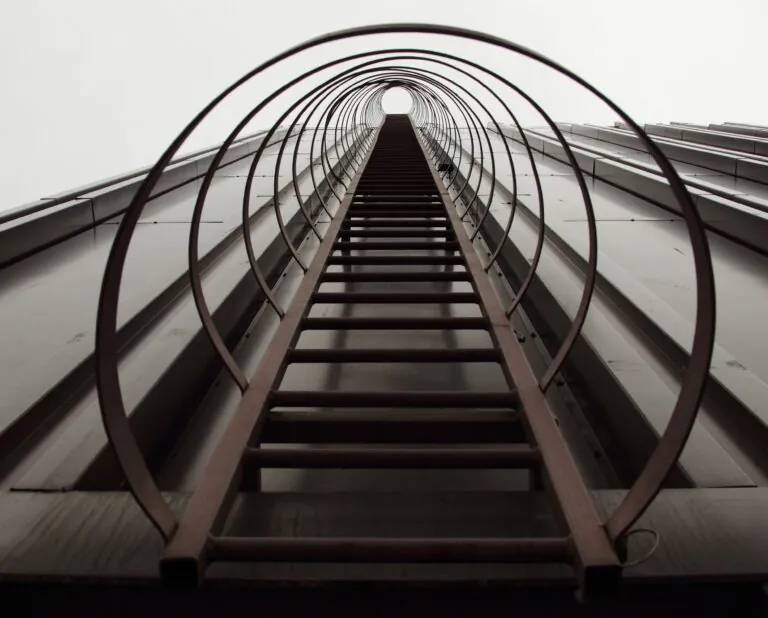
Vertical ladders with cages are no longer considered compliant for new installations
IBC (International Building Code)
-
Roof access is required for buildings with certain square footage or rooftop equipment
-
Stairways or ladders must comply with specific angle, tread, riser, and landing dimensions
ANSI (American National Standards Institute)
-
ANSI A14.3 and A1264 provide design and safety standards for ladders and stairways
-
Emphasis on anti-slip features, load capacity, and user safety
Key Components of a Roof Access System
Let’s break down what makes a well-designed, code-compliant roof access system:
1. Roof Hatch
-
Acts as the final portal to the rooftop
-
Should be weatherproof and lockable
-
Must integrate with safety railing or guardrails to prevent fall hazards when open
2. Access Stairs or Ladders
-
Must have a clear tread, safe climbing angle, and stable structure
-
Should provide three points of contact for safety (especially ladders)
3. Safety Railings
-
OSHA requires guardrails around any opening on a rooftop
-
Roof hatches should include railing systems that prevent accidental falls
4. Landings & Platforms
-
Intermediate landings are needed if the rise exceeds a certain height
-
Platforms improve ergonomics and reduce fatigue
Comparing Access Methods: Ladders vs. Stairs
Vertical Ladders
Once the default for roof access, vertical ladders—especially caged ones—are falling out of favor for safety reasons. Despite their small footprint, they pose risks:
-
Difficult to climb while carrying tools
-
Increased risk of fall-related injuries
-
Cages provide a false sense of security and are no longer OSHA-approved for new builds
Ship Ladders
These are a steeper alternative to stairs, used when space is limited.
-
Angle: 50–70 degrees
-
Require strong handrails and non-slip treads
-
Suitable for infrequent access
Alternating Tread Stairs
Alternating Tread Stairs offer a safer alternative in compact areas.
Design highlights:
-
Staggered treads allow for steeper angles (56 or 68 degrees)
-
Users only step with one foot at a time, reducing risk of missteps
-
Requires less horizontal space than traditional stairs
Benefits:
-
Safer than vertical ladders
-
Less intimidating than ship ladders
-
Ideal for tight spaces that still require regular rooftop access
Use cases:
-
Industrial mezzanines
-
Access to elevated equipment
-
Direct access to roof hatches in constrained environments
When to Use Roof Hatch Stairs
Not all buildings need stairs to access the roof, but if your facility meets one or more of the following, a stair system is recommended:
-
Rooftop equipment requires regular maintenance
-
Frequent rooftop traffic (e.g., solar panel inspections, HVAC service)
-
Multiple teams need access, including third-party contractors
-
The climb is more than 10–12 feet high
Planning for a Roof Access Installation
A proper access system requires careful planning and coordination with structural engineers and facility managers. Consider the following steps:
1. Assessment
-
Where is the access point located?
-
Is there enough space for stairs?
-
What is the frequency of access?
2. Design
-
Choose between a stair, ship ladder, or alternating tread stair based on your space and budget
-
Determine hatch size and location
-
Specify railing and fall protection
3. Code Review
-
Ensure all components meet OSHA and IBC requirements
-
Integrate safety features like self-closing gates and grab rails
4. Fabrication & Installation
-
Partner with a manufacturer that offers prefabricated stair systems with quick install timelines
-
Confirm compatibility with your building’s layout and structure
Maintenance & Inspection of Roof Access Systems
Like all building elements, access solutions must be maintained to remain safe:
-
Quarterly inspections of stairs, treads, fasteners, and handrails
-
Annual inspection of roof hatches for corrosion, gasket integrity, and weather sealing
-
Re-coat or refinish metal components to prevent rust in coastal or industrial environments
Real-World Applications
Here are examples of roof access solutions across industries:
1. Manufacturing Facility
-
14-ft alternating tread stair leading to a hinged roof hatch
-
Guardrails with toe boards installed on the rooftop perimeter
2. Commercial Office Building
-
Full-width roof access stair in stairwell core
-
Large hatch with shock-assisted lift and locking bar
3. Warehouse
-
Ship ladder retrofitted to meet fall protection requirements
-
Safety signage and access permits required for entry
Cost Considerations
Costs vary widely depending on your configuration:
| Component | Estimated Cost (USD) |
|---|---|
| Standard roof hatch | $1,000 – $2,500 |
| Roof access stairs | $3,000 – $10,000+ |
| Alternating tread stairs | $2,500 – $6,500 |
| Safety railings & guards | $500 – $3,000 |
| Engineering & permits | Varies by jurisdiction |
Conclusion: A Safer Climb to the Top
Vertical ladders, especially those with outdated caged designs, were once the go-to option for rooftop access—but modern safety standards and ergonomic concerns demand better. Alternatives like roof hatch stairs and alternating tread stairs offer a safer, more efficient, and more compliant solution.
By thoughtfully planning your roof access system—from the hatch to the handrails—you’ll create a safer working environment, reduce risk exposure, and protect those who keep your facility running smoothly.