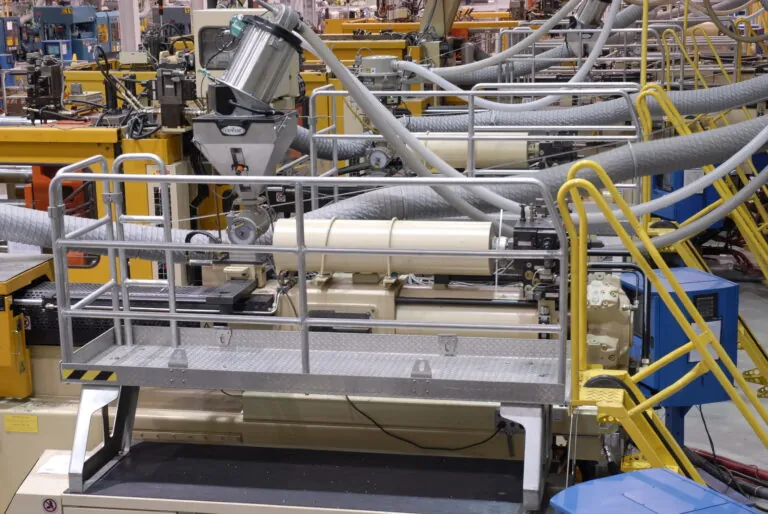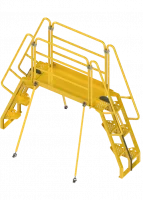

When it comes to conveyor crossover bridges, various shapes and configurations are available to suit different industrial applications and space constraints. Here are some of the most common crossover conveyor bridge shapes:
Request a custom crossover stair quote!
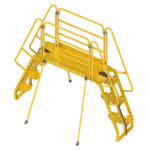 Straight Bridge
The straight bridge is the most basic and straightforward configuration. It consists of a linear structure that spans over the conveyor system, providing a direct path for workers to cross from one side to the other.
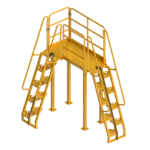 L-Shaped Bridge
An L-shaped bridge features a 90-degree turn, allowing the crossover to change direction midway. An L-shaped bridge is useful when space constraints or layout considerations require the crossover to be configured around obstacles or machinery.
T-Shaped Bridge
Similar to the L-shaped bridge, the T-shaped bridge includes a perpendicular extension that branches off from the main bridge structure. A T-shaped crossover provides additional access points or pathways for workers to navigate or access equipment within the industrial facility.
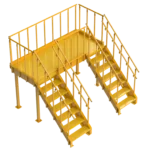 U-Shaped Bridge
A U-shaped bridge consists of a linear section that spans over the conveyor system, followed by a 180-degree turn, and another linear section that returns to the starting point. This configuration is useful for creating a continuous loop for workers to move between different areas of the facility.
S-Shaped Bridge
The S-shaped bridge features a serpentine design with multiple bends or curves along its length. An S-shaped crossover is ideal for maximizing clearance over conveyor systems and navigating around tight corners or irregularly shaped spaces.
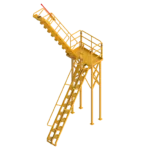 Switchback Bridge
A switchback bridge includes a series of alternating ramps or stairs that ascend and descend in a zigzag pattern. This configuration is useful for providing access to elevated platforms or mezzanine levels while minimizing the footprint of the crossover structure.
Curved Bridge
A curved bridge features a gentle curve or arc along its length, providing a visually appealing and ergonomic design. A curved crossover is suitable for applications where straight or angular bridges may not be feasible due to space constraints or aesthetic considerations.

Multi-Level Bridge
A multi-level bridge includes multiple tiers or levels that span over the conveyor system at different heights. This configuration is useful for accommodating varying floor levels or providing access to elevated platforms or mezzanine levels within the industrial plant.
Modular Bridge
A modular bridge consists of prefabricated components that can be assembled and configured in various shapes and sizes. Modular crossovers offer flexibility and scalability, allowing for easy customization to suit specific application requirements and layout constraints.

Custom Bridge
In addition to standard configurations, custom crossover bridge designs can be tailored to meet unique requirements and specifications. Custom bridges can incorporate specific features, such as integrated stairs, handrails, guardrails, and access gates, to optimize functionality and safety for workers.
Conclusion
Above are just a few examples of the most common crossover conveyor bridge shapes. The optimal shape and configuration will depend on factors such as space constraints, layout considerations, accessibility requirements, and specific application needs within the industrial facility. Collaborating with experienced engineers, designers, and manufacturers can help identify the most suitable conveyor crossover design for your particular application.