Work platforms are a core component of safe, efficient industrial and commercial workplaces. While the term work platform is often used broadly, it actually encompasses a wide range of platform types—each designed for specific tasks, users, and operating conditions.
This page serves as both:
- a guide explaining how workplace work platforms are categorized and used
- a glossary defining the most common and recognized platform types found in industrial environments
What Is a Workplace Work Platform?
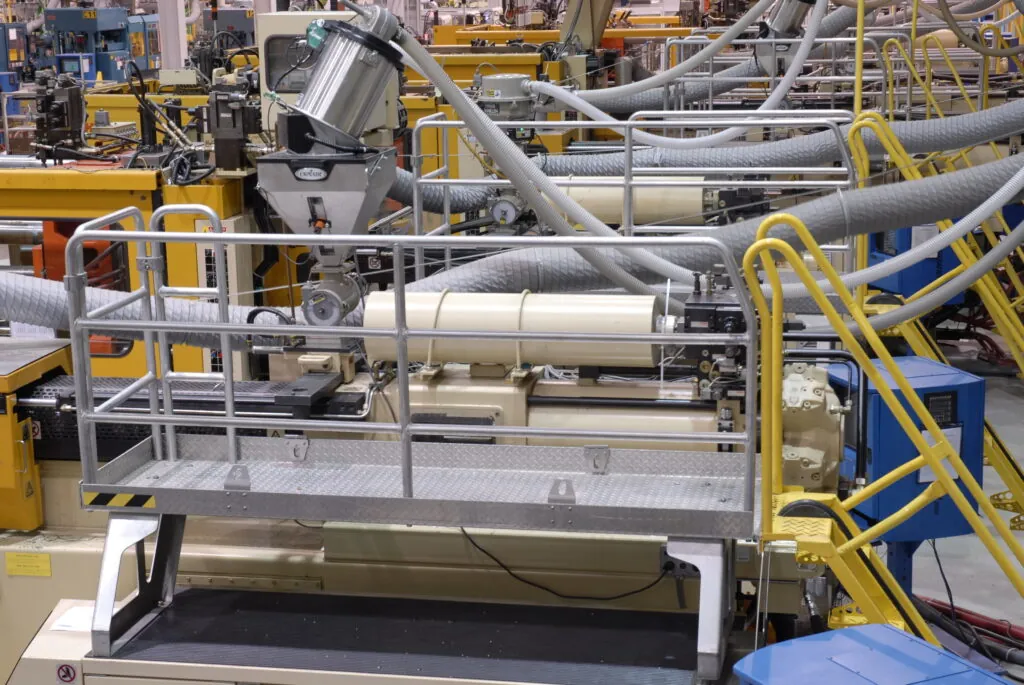
A workplace work platform is an elevated, stable surface designed to support personnel while performing tasks at height. Unlike ladders or temporary access equipment, work platforms allow workers to face their task, maintain balance, use tools, and move safely within a defined area. Work platforms may be permanent or temporary, fixed or mobile, and are often integrated with stairs, handrails, and fall-protection systems. Their design and use are typically governed by safety standards enforced by the Occupational Safety and Health Administration (OSHA) and similar regulatory bodies.
How Workplace Work Platforms Are Categorized
Work platforms are best understood when grouped by function, rather than by appearance alone. Most platforms fall into one of the following functional categories:
- Operator and production platforms
- Maintenance, service, and inspection platforms
- Access-oriented work platforms
- Facility and structural platforms
- Mobile, adjustable, and temporary platforms
Each category contains multiple platform types, defined below.
Workplace Work Platform Glossary
Operator & Production-Oriented Work Platforms
These platforms support routine, task-based work performed by operators as part of daily production or processing activities.
Operator Platforms
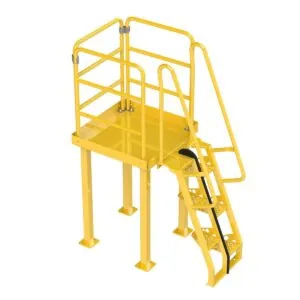
Operator platforms are elevated platforms designed to position workers at the correct height and orientation to operate machinery, production equipment, or process controls.
Common characteristics
- Intended for frequent, repetitive use
- Sized for standing and light movement
- Emphasis on ergonomics, visibility, and reach
- Typically include guardrails and toe boards
Typical environments
- Manufacturing lines
- Packaging and bottling operations
- Food and beverage processing
Assembly Work Platforms
Assembly work platforms support workers performing hands-on assembly tasks at height, often requiring space for tools, components, and movement.
Common characteristics
- Larger standing surfaces than operator platforms
- Designed for extended task duration
- Often fixed or semi-permanent
Production Line Platforms
Production line platforms run alongside or above production lines, allowing workers to perform tasks without disrupting workflow.
Common characteristics
- Linear or segmented layouts
- Positioned to maintain line-of-sight and access
- Integrated into production environments
Maintenance, Service & Inspection Platforms
These platforms are designed for periodic or routine access related to equipment upkeep rather than continuous operation.
Maintenance Work Platforms
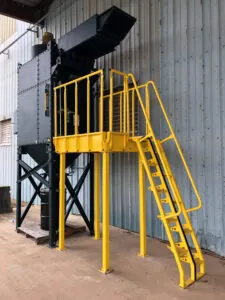
Maintenance work platforms provide stable elevated surfaces for servicing, repairing, or adjusting equipment.
Common characteristics
- Designed for tool use and component handling
- Often equipment-specific
- May integrate stairs or access platforms
Service Platforms
Service platforms are similar to maintenance platforms but are often intended for shorter-duration or lighter-duty tasks.
Typical uses
- Lubrication
- Filter changes
- Belt or component replacement
Inspection Platforms
Inspection platforms provide safe access for visual checks, monitoring, and compliance inspections.
Common characteristics
- Minimal platform area
- Designed for brief but frequent access
- Emphasis on visibility and safety
Access-Oriented Work Platforms
These platforms prioritize safe reach and movement, with limited standing area for brief tasks.
Access Work Platforms
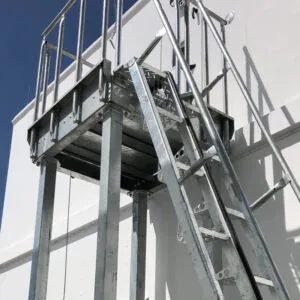
Access work platforms provide a small standing surface primarily intended to support safe access to elevated or obstructed areas.
Common characteristics
- Emphasis on access rather than extended work
- Integrated stairs and handrails
- Compact footprints
Equipment-Specific Work Platforms
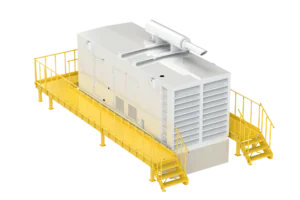
Equipment-specific work platforms are engineered around a particular machine or system like generator platforms or HVAC platforms to support access and task performance.
Common characteristics
- Custom geometry matched to equipment
- Designed for frequent servicing or inspection
- Often paired with stairs or access platforms
Facility & Structural Work Platforms
These platforms support broader facility operations rather than individual machines.
Mezzanine Work Platforms
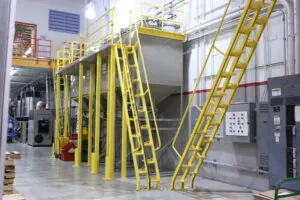
Mezzanine stairs and work platforms create intermediate floor levels within a building, expanding usable space vertically.
Common characteristics
- Large platform areas
- Structural integration with the building
- High load capacities
Catwalks and Walkway Platforms
Catwalks and walkway platforms provide elevated paths for movement between areas rather than dedicated work zones.
Common characteristics
- Narrow walking surfaces
- Guardrails for fall protection
- Often connect multiple platform areas
Loading and Transfer Platforms
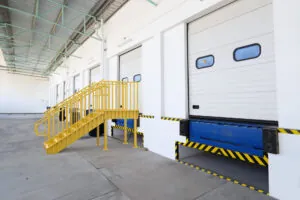
Loading and transfer platforms are used where materials, products, or equipment are transferred between elevations.
Common characteristics
- Positioned near docks or equipment interfaces
- Designed to support material handling tasks
Mobile, Adjustable & Temporary Work Platforms
These platforms emphasize flexibility and short-term use.
Mobile Work Platforms
Mobile work platforms are designed to be moved between locations, typically using wheels or casters with locking mechanisms.
Common characteristics
- Portable and repositionable
- Limited height compared to fixed platforms
- Used for varied tasks across a facility
Adjustable-Height Work Platforms
Adjustable-height work platforms allow elevation changes to accommodate different tasks or ergonomic needs.
Common characteristics
- Mechanical or hydraulic adjustment
- Often mobile
- Limited duty cycles
Temporary Work Platforms and Scaffolding
Temporary work platforms are used for short-term projects such as construction, renovations, or shutdowns.
Common characteristics
- Temporary installation
- Highly configurable
- Dismantled after project completion
How These Platform Types Work Together
Most industrial facilities rely on multiple platform types, each serving a distinct role:
- Operator platforms for daily production
- Access-oriented platforms for reach
- Maintenance and inspection platforms for upkeep
- Mezzanines and catwalks for facility flow
Understanding these distinctions allows safer design decisions and more effective long-term planning.
Final Takeaway
“Work platform” is an umbrella term—but the specific platform type matters. Operator platforms, maintenance platforms, access platforms, and structural platforms all serve different purposes, even when they appear similar. Selecting the correct platform type improves safety, productivity, compliance, and overall facility performance.