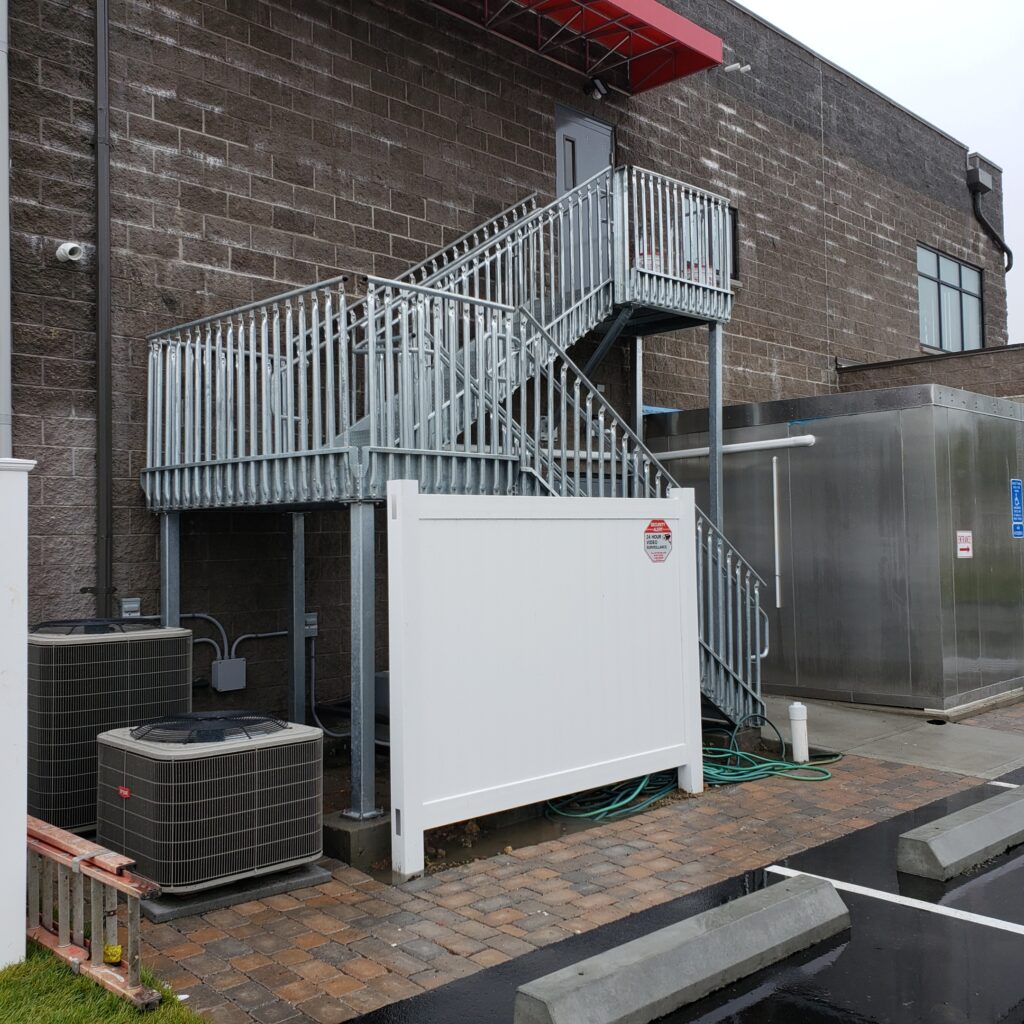
Staircases are vital components of commercial buildings, providing safe and efficient vertical movement for occupants and visitors. Understanding the standard dimensions of commercial stairs is essential for architects, engineers, contractors, and building owners. These standards ensure compliance with IBC building codes to create functional and accessible staircases. In this guide, we’ll explore the standard dimensions of commercial stairs, including tread depth, riser height, and stair width.
Tread Depth
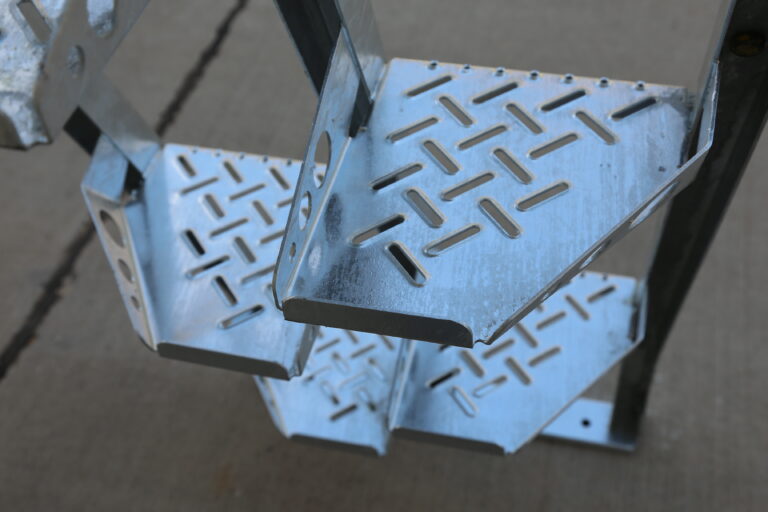
A tread is the horizontal portion of a staircase that you step on when climbing up or down a flight of stairs. Tread depth refers to the horizontal depth of each step, measured from the leading edge of a step back to the stair riser. The standard tread depth for commercial stairs typically ranges from 10 to 11 inches. This depth ensures that each step provides sufficient space for users to place their entire foot comfortably while using the staircase.
Riser Height
Riser height, also known as the vertical rise or simply the “rise,” refers to the vertical distance between consecutive stair treads. The standard riser height for commercial stairs typically falls within the range of 7 to 8 1/4 inches. Consistent riser heights are essential for ensuring user safety and comfort. Variations in riser height can cause users to trip or stumble while navigating the stairs.
Stair Width
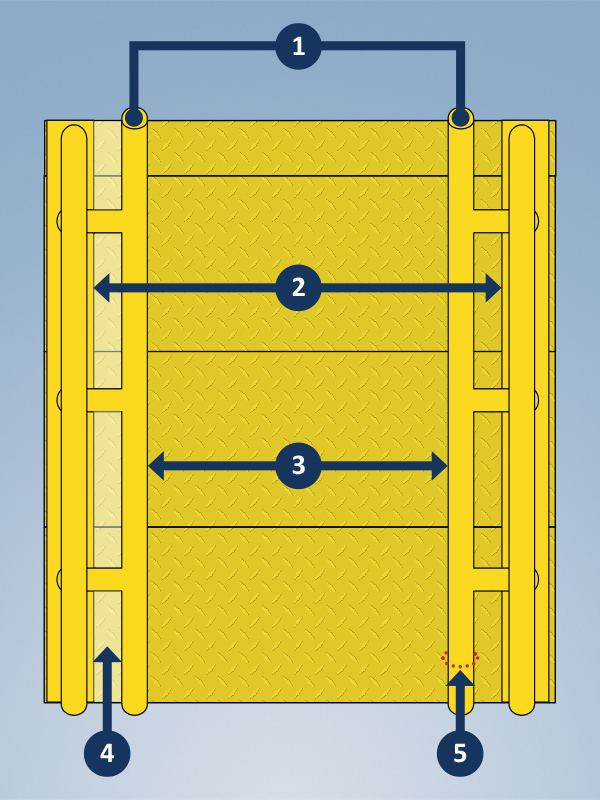
Stair width refers to the horizontal width of the staircase, including the treads, risers, and any handrails or guardrails. The standard minimum width for commercial stairs is typically 44 inches. This width provides adequate space for users to ascend and descend the stairs comfortably and safely. However, larger stair widths may be required for high-traffic areas or buildings with higher occupancy loads.
Headroom Clearance
Headroom clearance is the vertical distance between the walking surface of the stairs and any overhead obstruction, such as a ceiling. The standard minimum headroom clearance for commercial stairs is typically 80 inches. Maintaining adequate headroom clearance is essential for preventing head injuries and ensuring user comfort and safety while navigating the staircase.
Handrails and Guardrails
Essential safety features of commercial stairs, handrails and guardrails provide support and fall protection for users. Handrails are typically required on both sides of the staircase. They must have a height between 34 and 38 inches above the stair tread. Guardrails are necessary along open sides of stairs, with a minimum height of 42 inches above the leading edge of the stair tread.
Nosing
The nosing refers to the protruding edge of the tread beyond the riser below. The standard maximum nosing projection for commercial stairs is typically 1 1/4 inches. Excessive nosing projection increases the risk of tripping and should be avoided to ensure user safety.
Landing Platform Dimensions
Landings are intermediate platforms between flights of stairs. The platforms provide areas for users to rest, change direction, or access different levels safely. The standard minimum dimensions for commercial stair landings are typically equal to the width of the stairway and at least 44 inches in depth perpendicular to the direction of travel.
Conclusion
Understanding the standard dimensions of commercial stairs is essential for creating safe, functional, and compliant staircases in commercial buildings. By adhering to standard dimensions for commercial stairs, architects, engineers, contractors, and building owners can ensure the safety and accessibility of staircases for occupants and visitors. Additionally, consulting applicable building codes and standards, such as the International Building Code (IBC), is essential for ensuring compliance and obtaining necessary permits for construction projects.