Carbon steel is the backbone of industrial construction, and when it’s finished with a powder coat, it becomes one of the most practical, durable, and cost-effective materials available for metal stairs, platforms, and access systems. Here’s a closer look at where this finish comes from, what it’s made of, and why it remains a top choice for facilities across every industry.
A Brief History of Carbon Steel and Powder Coating in Industry
Carbon steel itself dates back to the mass-production breakthroughs of the 19th century, when the Bessemer process (patented in 1856) made steel affordable and available at industrial scale for the first time. That shift is what made structural steel — and eventually prefabricated stair and platform systems — possible in modern factories, warehouses, and processing plants.
Powder coating came much later. The technology was developed in Germany in the late 1940s and refined through the 1950s and ’60s, using an electrostatic process that applies dry powder to a metal surface before curing it under heat into a hard, even finish. By the 1970s, powder coating had become standard across heavy industry, largely because it solved two problems that plagued traditional wet paint: it didn’t drip, run, or sag during application, and it didn’t rely on solvent-based chemicals that created VOC emissions and disposal headaches. Manufacturers adopted it quickly for exactly the kind of equipment metal stairs are built for — components that needed a tough, consistent, factory-grade finish that could survive daily industrial wear.
Features of Powder-Coated Carbon Steel
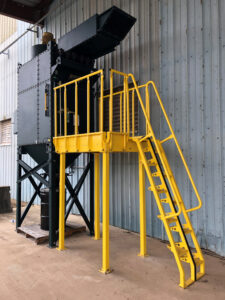
- Heavy-gauge strength. Carbon steel offers excellent load-bearing capacity, commonly supporting 1,000 lb+ ratings in prefabricated stair systems.
- Electrostatically applied finish. Powder coating bonds to the steel surface using an electric charge, then cures under heat to form a hard, uniform shell — no drips, no thin spots.
- Chip and scratch resistance. The cured finish is significantly harder than wet paint, standing up to the dings and abrasion that come with daily foot traffic, tool drops, and equipment contact.
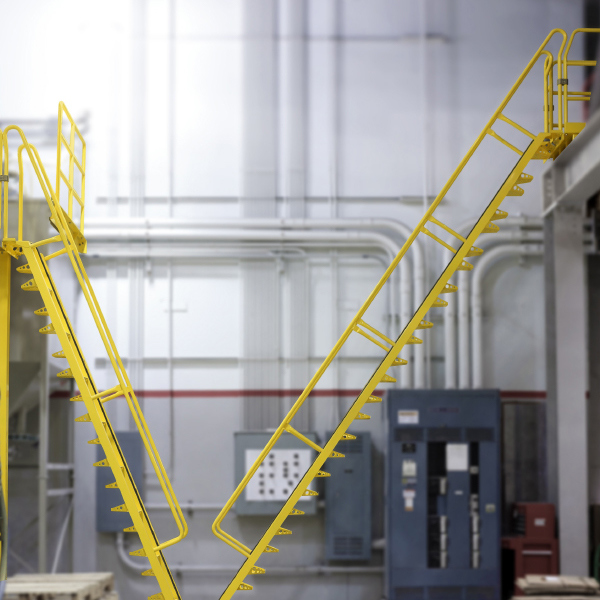
- Color and safety customization. Powder coating is available in a wide range of colors, including OSHA-standard safety yellow, making it easy to meet facility color-coding requirements.
- Environmentally friendlier process. Because there’s no solvent involved, powder coating produces far less volatile organic compound (VOC) waste than traditional paint finishes.
Benefits for Metal Stair Applications
Cost-effective without sacrificing durability. Powder-coated carbon steel delivers a strong, long-lasting finish at a lower cost than galvanizing or stainless steel, making it an efficient choice for indoor and moderate-exposure outdoor applications.
Ideal for high-traffic industrial environments. Manufacturing floors, distribution centers, and equipment access points see constant foot traffic — powder coating’s resistance to chipping and wear keeps stairs looking and performing well for years.
Meets code requirements out of the box. When paired with properly engineered carbon steel stair systems, powder coating supports OSHA and IBC compliance for tread visibility, handrail durability, and overall structural integrity.
Lower long-term maintenance. Unlike wet paint, which can require repainting and touch-ups over time, a properly cured powder coat resists fading and wear, reducing the need for ongoing upkeep in typical indoor and covered environments.
Where Powder-Coated Carbon Steel Makes the Most Sense
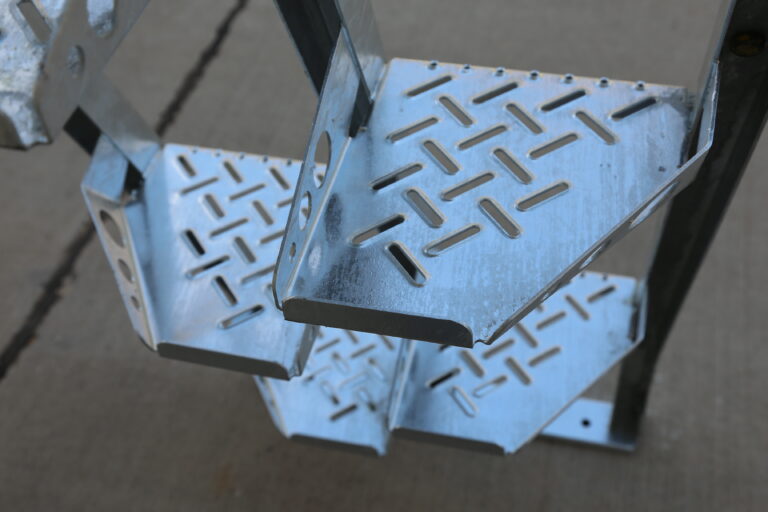
This finish is best suited to indoor facilities and covered or moderately exposed outdoor applications — think manufacturing plants, distribution centers, equipment platforms, and mezzanine access where budget efficiency and durability both matter, but extreme outdoor corrosion isn’t the primary concern. For applications with heavier moisture, chemical exposure, or direct weathering, a galvanized or stainless finish is typically the better fit.
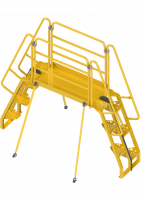
Lapeyre Stair manufactures pre-engineered metal stairs, platforms, and crossover systems in powder-coated carbon steel, galvanized steel, aluminum, and stainless steel — built to your specifications and ready to install. Talk to a stair expert about the right material for your application.