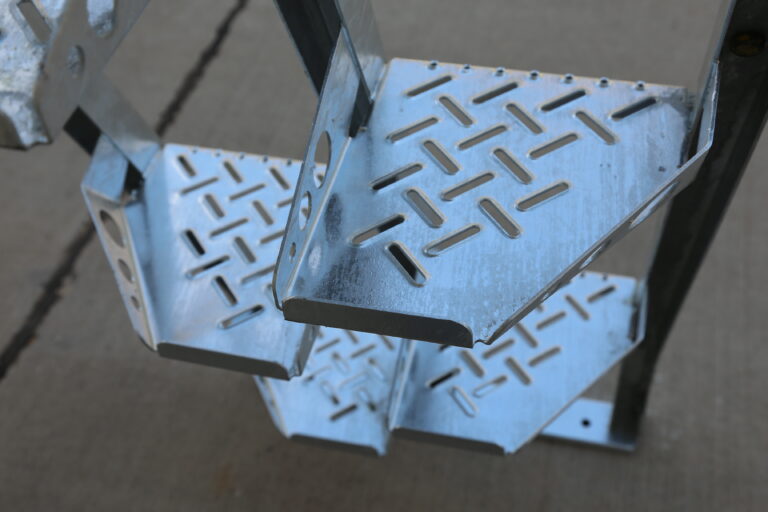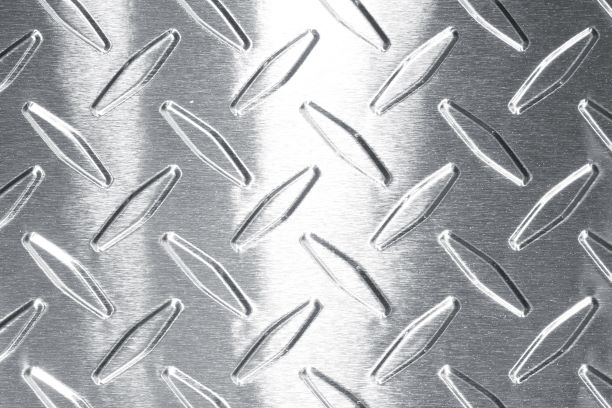

For any facility that puts metal stairs and platforms up against real weather, moisture, or chemical exposure, galvanized carbon steel has been the industry’s go-to answer for nearly two centuries. Here’s what makes this finish so effective, where it came from, and why it remains a top choice for demanding industrial environments.
A Brief History of Galvanized Steel in Industry
Hot-dip galvanizing — the process of coating steel in a bath of molten zinc — was patented in 1837 by French engineer Stanislas Sorel. The process quickly spread across Europe and North America as industries realized what zinc could do that paint couldn’t: protect steel from rust even after the surface finish was scratched or damaged.
Galvanizing became especially critical as the 19th and 20th centuries brought a wave of outdoor infrastructure — bridges, railings, agricultural equipment, and later oil and gas facilities, marine structures, and wastewater plants. These environments punished unprotected steel and painted surfaces alike, and galvanizing offered something neither could: a coating that actively fought corrosion rather than simply covering it up. By the mid-20th century, hot-dip galvanizing was a standard specification across heavy industry, and it remains one of the most trusted corrosion-protection methods used in structural steel today.
Features of Galvanized Carbon Steel
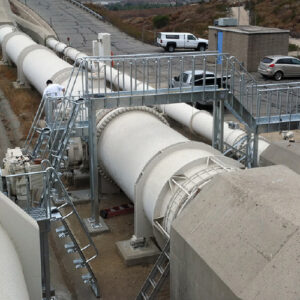
Galvanized Alternating Tread Stair Crossover, Wastewater
- Sacrificial (cathodic) protection. Zinc corrodes preferentially to steel, meaning the coating protects the base metal even if the surface is scratched or chipped — a property paint and powder coat simply don’t have.
- Thick, metallurgically bonded coating. Hot-dip galvanizing creates a zinc-iron alloy layer that’s bonded to the steel itself, not just applied on top of it, giving it exceptional adhesion and abrasion resistance.
- Self-healing corrosion resistance. Because zinc sacrifices itself to protect exposed steel, small scratches and surface damage don’t lead to rust the way they would on painted surfaces.
- Long service life. Properly galvanized steel structures routinely last 50+ years in outdoor and industrial-exposure environments with little to no maintenance.
- Consistent, all-over coverage. The dipping process coats every surface, edge, and interior weld — areas that are notoriously difficult to protect with brush or spray-applied coatings.
Benefits for Metal Stair Applications
Built for harsh and corrosive environments. Petrochemical plants, marine facilities, wastewater treatment sites, and any application with direct outdoor exposure benefit enormously from galvanizing’s corrosion resistance.
Lower total cost of ownership. While galvanizing typically costs more upfront than powder coating, it dramatically reduces or eliminates the need for repainting, patching, or part replacement over the structure’s lifespan — often making it the more economical choice long-term.
No ongoing touch-up maintenance. Unlike painted or powder-coated steel, which can require recoating as the finish wears, galvanized steel’s protective properties persist even through surface wear and scratching.
Proven performance across decades of industrial use. Galvanizing isn’t a new or unproven technology — it’s the standard specification for outdoor structural steel precisely because of its long, well-documented track record.
Where Galvanized Carbon Steel Makes the Most Sense
Galvanized steel is the right call for outdoor stairs, platforms, and crossover systems exposed to weather, humidity, chemical fumes, or salt air — common in petrochemical, marine, wastewater, and heavy manufacturing settings. For indoor applications with lower exposure risk, powder-coated carbon steel often delivers comparable durability at a lower cost.
Lapeyre Stair manufactures pre-engineered metal stairs, platforms, and crossover systems in galvanized steel, powder-coated carbon steel, aluminum, and stainless steel — built to your specifications and ready to install. Talk to a stair expert about the right material for your application.